Pages

Friday, January 11, 2008

Criminal Apostate Malaysia, Vietnam, China, Iran and Others

Disgracing themselves before God

The criminal -- human rights violating, Tobacco protectionist -- entities of the governments of Malaysia, Vietnam, China, Iran and others Murdering People for Cannabis and Other Drugs.

Useful reading

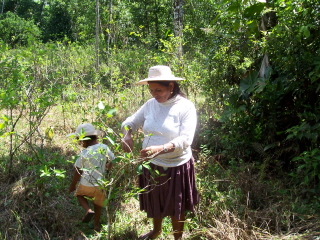
The women on the left just before being murdered;
the women on the right, along with her bosses are the real criminals that are going to hell.
(excerpt)

Lines said it is time to act. "As I did the research for this report, I was surprised how little attention this issue has received, despite the fact that executions for drug offenses clearly violate international law. There was much less literature on the topic than I assumed there would be when I started," he noted. "I was also surprised to see that while the worldwide trend is clearly toward the abolition of the capital punishment -- the number of countries with the death penalty has steadily decreased over the past 20 years -- at the same time, the number of countries with laws allowing the death penalty for drugs has increased," Lines continued. "That's completely opposite to the general trend away from capital punishment. I think this is an issue where we can almost empirically measure the negative effects of the war on drugs on human rights."
Let's not forget that cigarettes of addictive bright leaf Tobacco are legal in these countries, so it's definitely NOT about addiction or health.

Don't overlook role of Big Tobackgo

The demonization of "drugs" (always including cannabis)
serves the agenda of the tobacco industry to keep their product looked upon as "normal" compared to something else. Politicians and jurists trying to measure up to the standard of "strong against drugs", even to the point of executions, are reacting to the disproportionate power of the tobacco industry and its natural allies (for example, Big Pharma). For example, one website asserts that tobacco is the biggest money crop in Pakistan and furnishes 10% of government revenues.

Big Pharma Feeds off Big Tobackgo

I mention Big Pharma because a large percentage of its revenues is derived from treating unnecessary diseases caused by hot burning overdose nicotine cigaret addiction. If, say, cannabis turned out to be helpful to millions of addicts trying to quit tobacco addiction, this would soon lead to a drop in sales of drugs used to treat high blood pressure, etc.

Cigaret Smoking Promotes Execution Mentality

If you examine cigaret smoking itself as a educational force on the personality, it teaches the user to carry out a dozen or more symbolic executions a day-- each cigaret starts out large, adult, clean, straight, white and pure looking, and winds up small, dirty, stinky, sort of like an evil baby, and is disposed of much like a disposable diaper. Children, seeing adults enact this process, learn that the cigaret is guilty of the sin of being small (used up, no good), the sin of being stinky, etc., and therefore is being punished. Children notice things like the way an adult grinds out a cigaret or throws it away.

We've been trained to ignore the fact that this kind of "training" sticks with a person growing up into a legislator or a judge empowered to handle human beings in the way required by the "sponsor" (Big Tobackgo) which funds governments all over the planet.

The Caveat Emptor Society

Aside from overt capital punishment, another assault on human rights is the cigaret genocide itself-- advertising and peer pressure used to train youngsters to damage themselves through smoking. Children who acquire the habit in order to have an easier time staying awake to study for the big text, or fool the boss and get a paycheck etc., know somewhere in their mind that they are sacrificing themselves--or the last ten years of their life-- in order to do their duty by making enough money to pay the bills for the family.

This is the biggest crop of suicide bombers on earth (well, think of the side-stream smoke, right?).

Overlooked Obvious Universal Remedy

A uniform (25 mg. servings) smoking reduction utensil, with a narrow screened crater, if promoted worldwide and used by all smokers, could rapidly result in a reduction of 700-mg. cigaret addict "executions" from 5.3 million/year to almost zero. (Illegality of cannabis is a stratagem to suppress the emergence of such a utensil. In Queensland, for example, any utensil permitting smaller, safer tokes is either illegal or suspected of being so, due to a "Cannabis utensil law" which is in turn part of a garbled tobacco control system which permits the tobacco industry to go on selling hot burning overdose cigarets.)

As long as the secret sacred cigaret holocaust continues unanswered, we are hypocrites if we raise our stink only about a few hundred "drug executions". It's time to get serious about the links between these two problems and promote a worldwide harm reduction smoking equipment reform..

Tuesday, January 8, 2008

The Pharmacratic Inquisition: Subverting Public Health

Criminal Market Control

(Criminal Mercantilism)


Protecting the more dangerous from the less:

- alcohol and Tobacco from Coca and Cannabis

- synthetics from herbs. Cigarettes the biggest beneficiary and public health threat; methamphetimine the ultimate result of prohibition’s iron law


Making the safer infinitely more dangerous:

- Coca to crack

From cigarettes to crack, the pharamacratic inquisition costs billions upon billions in added health care costs.

The Pharmacratic Inquisition: Subverting Freedom of Medicine and Diet: The Right to Choose

A basic violation:

Subverting the U.S. Constitution

Violating the 1st, 8th, 9th, 10th Amendments


It's a Pharmacratic Inquisition

as a continuation of past inquisition[s]

It enforces a drug control regimen of what substances are legal or illegal.

It does so with statutes making certain substances illegal and setting penalties for their manufacture, sale or possession with lengthy prison sentences.

the force of the police and the courts, which have simply accepted the government's power to prohibit.

Within just the U.S.A., over 800,000 persons were arrested and taken to jail for possessing Marijuana.

Monday, January 7, 2008

Understanding America’s Drug War

Useful Reading ...

Collision Course: Bolivia's "Coca, Si; Cocaine, No" Policy Runs Afoul of the International Drug Control Board and, Probably, the United States

From DRC Net

About Criminal Mercantilism that Subverts Liberty and Health

http://stopthedrugwar.org/files/leaves-drying-in-warehouse.jpg

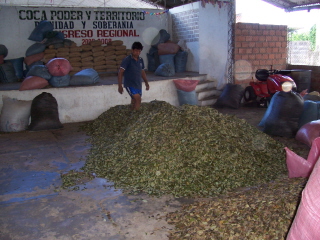
Drying the leaves in the warehouse.
The sign reads ''Coca Power and Territory, Dignity and Sovereignty, Regional Congress 2006-08''


That does not sit well with either the United States or the international anti-drug bureaucracy based in the United Nations. This week, the International Narcotics Control Board (INCB) took direct aim at Bolivia in its 2006 annual report (go to Special Topics, beginning with paragraph 171). In the report, INCB accuses Bolivia of violating the 1961 Single Convention on Narcotics, which defines the coca plant as an illicit drug.

"The situation in Bolivia, which for many years has not been in conformity with that State's obligations under the international drug control treaties, continues to be a matter of particular concern to the Board," the report reads. "Bolivia is a major producer of coca leaf, and national legislation allows the cultivation of coca bush and the consumption of coca leaf for non-medical purposes, which are not in line with the provisions of the 1961 Convention."

The INCB was particularly concerned that Bolivia "has indicated its intention to review existing national drug control legislation, with a view to using coca leaf for a wide range of products, some of which might be exported." That, too, would not be in line with the INCB's interpretation of the Convention.

The language of the INCB report is a clear shot over the bow aimed at the Morales government's expressed policy of "coca, si; cocaine, no" and its efforts to expand the use of the coca leaf for medicinal and nutritional products. Worse yet, in INCB's view, Bolivia could set a bad example for other coca producing countries: "The Board is also concerned that policy developments in Bolivia could have repercussions in other countries in South America," the report fretted.

The United States has also expressed concern about Bolivian coca policy under Morales, as well as concerns about Morales' ties with Venezuelan leader Hugo Chavez, whose government earlier this month finalized an agreement with Bolivia to finance the construction of coca processing plants in Bolivia and to import Bolivian coca products to Venezuela. So far this year, the US government has limited its expressions of concern to worries about the "anti-democratic" natures of the two left-leaning South American leaders, but the State Department's annual review of other countries' compliance with US anti-drug policies is due later this month. A key question is whether Morales' policies will lead the US to "decertify" Bolivia as being in compliance with those objectives.

http://stopthedrugwar.org/files/vitalia-and-daughter.jpg

Coca grower union member and former leader Vitalia Merida with her daughter in their coca field -- hidden several miles from the road via arduous hike, a legacy of eradication days

The Bolivian government didn't help matters last week when its foreign minister, David Choquehuanca, told a gathering of the Organization of American States that Bolivia would never eradicate coca and that it was more interested in "consensus" than "democracy." "The struggle of the indigenous peoples goes beyond democracy," said Choquehuanca. "In the word democracy, there exists the word submission, and to submit to one's neighbor is not to live well. For this reason, we wish to resolve our problems through consensus."

Clearly, there is no international consensus right now on coca, and if the Bolivian officials and analysts Drug War Chronicle spoke with this week are right, neither is there any indication the Bolivian government is about to bow to drug warriors in Washington and Vienna.

Industrialization of coca processing and expanding legal markets are the correct course of action, said Bolivian Deputy (congressman) Asterio Romero Wednesday. A member of Morales' Movement Toward Socialism (MAS) Party, Romero strongly supports the "coca, si; cocaine, no" policy. "First, I want to say that I am from the Chapare, I was a coca grower leader. It was always 'coca zero,' but there will never be zero coca," he told the Chronicle. "We fought for many years, we suffered many dead and imprisoned because coca is a source of economic subsistence for us. We will never allow other governments to impose 'coca zero' on us. We are a sovereign nation; it is a matter of Bolivian dignity," he said.

"While, yes, we fight against the drug traffic -- and we are doing quite well; seizures of cocaine and precursor chemicals are up -- we also have to decriminalize coca growing, and industrialization is the way," Romero argued. "We have to revalorize the coca, we have to find more markets for coca. There are friendly countries that help us, like Venezuela, and we thank them for that."

"With its opposition to the coca leaf, the INCB merely foments the drug traffic," said Silvia Rivera, founder of the Bolivian group Coca y Soberania (Coca and Sovereignty), professor emeritus of sociology at the University of La Paz, and advisor to Romero. "Every leaf that goes to good, healthy uses is a leaf that doesn't go to the traffickers," she told the Chronicle. "That's the best way to fight against the drug traffickers. Those bureaucrats at the UN simply do not understand; they think coca is a drug."

http://stopthedrugwar.org/files/coca-museum-la-paz.jpg

The Coca Museum, downtown La Paz

"It is the same thing with the government of the United States," said Rivera. "The Americans cannot recognize the rationality of other ways of life, and its approach is truly schizophrenic. It fears the drug trade, yet creates the conditions for it to flourish by trying to block other uses for the coca plant. The US tries to argue that Evo is in favor of the cocaine dealers, but it is the US policy that aids them. Also, the US has backed the narco-dictators in the past because they were radical fascists. That's who the US supports and gives arms to so they can kill the people."

In fact, rather than retreating in the face of criticism from the INCB and the US, the Morales government appears determined to push the envelope with its agreement to supply coca products to Venezuela. Bolivia is also making noises about going to the root of the problem by mounting an effort to amend the Single Convention to remove coca from its list of illicit drugs.

"This is a way for Chavez to push the limits and see what the boundaries are," said Kathryn Ledebur of the Cochabamba-based Andean Information Network, which has monitored the Bolivian coca economy and efforts to repress it for years. "Who is going to stop him? There are already substantial coca leaf exports to northern Argentina, and nobody says anything about that. Still, if this helps sharpen the focus on changing the Single Convention, that's a good thing -- it needs to be amended."

Ledebur doubted that the Morales government would make a concerted effort to amend the Single Convention in Vienna next year. "Let's just say that his domestic coca policy is more advanced than his international one," she said. "I see little chance of anything getting done unless there is some sort of concerted lobbying effort with Peru, and I don't see Peruvian President Garcia as someone who is willing to actively buck the US."

Such a move would require a concerted effort by coca producing countries, said Romero, and he didn't see that happening just yet. "It is the job of the Bolivian government to change the Vienna Convention," he said, "but it is also the job of Colombia and Peru to join us at the UN. While we here in Bolivia have with Evo a government with popular support to push this, in Peru and Colombia, the governments are neo-liberal and pro-imperialist and they will not join us. But we are anti-neoliberal and we are going to maintain this position. Still, we are willing to talk government to government and man to man about this."

http://stopthedrugwar.org/files/santos5.jpg

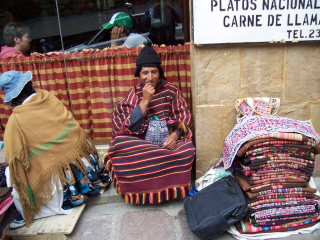
La Paz street vendor Santos, enjoying an afternoon coca chew

But for Romero and the Bolivian government, standing up for coca is a matter of national pride. "We are a sovereign government, and we will move forward with our policies," he said. "Coca is not dangerous, coca is not poison. We will work bilaterally with countries that support our position. And countries that now try to impede us, like the US, well, perhaps we can send them some coca, too."

With Bolivia already facing off against the INCB, the next measure of the Morales government's coca policies will be the US certification decision, which should come by the middle of March. But given the current conjuncture in hemispheric affairs, with a rising tide of left-leaning governments and the US, obsessed as it is with affairs in the Middle East, losing influence in the region, the US may well step back from attempting to isolate and punish Bolivia via the certification process.

"The US still cannot step out of its anti-drug framework of using the military and forced eradication," said Ledebur, "but there is no agreement within the Bush administration about what to about certification. If it decertifies Bolivia, it loses what little leverage it has left. Bolivia now has other sources of assistance, and not just Chavez; it no longer has to blindly obey US dictates. If the US chooses to decertify now, what does it do next year?" she asked.

This is getting very interesting. The Morales government's "coca, si; cocaine no" policy is anathema to both the US and the INCB, but there appears to be little either can do to stop it, and chances are the Bolivian challenge will eventually aim directly at the 1961 Single Convention, perhaps knocking the first hole in what is the legal backbone of the global drug prohibition regime. Stay tuned.

A confrontation is brewing over Bolivian President Evo Morales' effort to rationalize coca production in his country and expand markets for coca-based products. After decades of fruitless efforts to wipe out the coca crop in Bolivia -- the "zero coca" policy embraced by the United States and shoved down the throat of successive Bolivian governments -- Morales, a former coca growers' union leader, has crafted policies that allow for the increased cultivation of coca from the 30,000 acres allowed under current Bolivian law to 50,000 acres. Now, the Morales government is also pushing for expanded legal markets for coca products and, in a joint venture with the Venezuelan government, is preparing to begin coca product exports to that country.

Drug War Issues Coca - Eradication

Bolivia should challenge US criminal mercantilism

Has EVo Morales considered suing the US under any free trade provisions?

Or the fact that Coca is safer then Coffee and infinitely safer then Tobacco?

What about a law suit against the US government for mass murder, given that Tobacco takes 40 million lives annually, Coca takes 0, and that the US largely went after Coca in the early 1900s as a "tobacco habit cure"?


DRC Net

Pharmacratic Mentality: Favoring Toxicity

The pharmacratic mentality favors generally more toxic substances: isolated elements in concentrated forms, whether derived from nature or synthetic, versus herbal compounds in dilute forms. It promotes a trend in general medical practice in much of the industrialized world since the early 1900s.

It’s not necessarily scientifically consistent, applying different standards to different substances with comparable and different uses. Coca leaf has comparable uses to that for Coffee and Tobacco leaf, with each containing small amounts of an alkaloid that for humans serves as a stimulant. Yet no one judges caffeine and nicotine by the standard used to condemn cocaine. Likewise those that would define any marijuana use as abuse would not do the same with the more toxic alternative of alcohol.

This encourages confusion and mis-information on the relative safety of these substances by distracting from the importance of the different forms of drugs:

- Dilute are the safest

- Concentrated the most dangerous.

It also distracts from the relative safety of the different substances.

- Coca

- Tea (caffeine-containing)

- Coffee

- Marijuana

- Opium

- Alcohol

- Tobacco- Bright Leaf (for cigarettes)