Pages

Saturday, October 10, 2009

Dana Beal on Public Health Marijuana

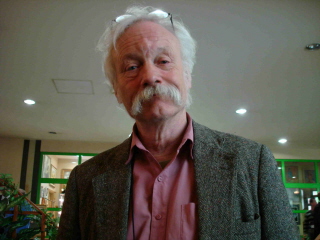
Dana Beal
PUBLIC HEALTH MARIJUANA:

The New Direction in Harm Reduction


by Dana Beal | Cannabis Health Journal | Issue 11

When the National Institute on Drug Abuse turned its sights on the mechanism of cannabinols and their endogenous analogues such as anandamide in the brain, they were disappointed to find that the dopamine model they relied on to explain drug abuse and addiction seemed to let cannabis off the hook. The modest uptick in dopamine levels produced by pot confirmed what the old hippies saw, marijuana is pleasurable, but not particularly addictive.

More recent work tracing the pathways of another neuro-transmitter, glutamate, has further explicated the question of marijuana’s addictiveness. Familiar to aficionados of cheap Chinese food as mono-sodium glutamate (MSG), it performs multiple functions throughout the brain and the body involved in long-term learning and memory and as a kind of natural stimulant that takes the brakes off” metabolic processes, causing everything to burn hotter.

In 2001 a Swiss researcher, Francois Conquet , made an interesting discovery with “knock-out” mice who had been bio-engineered not to have a particular glutamate pathway called m (for messenger) GluR5. Mice with no mGluR5 could not be trained to self- inject cocaine. This is highly significant because elimination of dopamine transporters and receptors in other knock-outs still left them able to be addicted through cocaine’s rewarding effects on serotonin. Microdialysis recorded the same dopamine spikes in both wild mice and the mGluR5-deficient ones, but soon after the researchers substituted intravenous cocaine for food, the mGluR5 knock-outs stopped pressing the lever. Their affinities for food, water, mating were unaffected; but cocaine could no longer “fool” the knock-outs into accepting it as a replacement for food, water and mating .

Cannabis and Glutamate

In Colorado Springs, the Chairman of the University of Colorado Biology Department is Bob Melamede . Dr. Melamede teaches a whole course on medical marijuana. Central to his thesis is the finding that cannabinols and the endogenous neuro -transmitters they mimic are glutamate antagonists; but not the kind of noncompetitive antagonists , like ibogaine , that come along to “plug the hole” after inonotropic glutamate receptors have opened up to let minerals through the cell membrane. Instead, cannabinols and anandamide act to “ backsignal ” along the metabotropic glutamate pathways that work (like mGluR5) through the second messenger systems and modulate signals of other neurotransmitters.

What cannabinols do is to tell glutamate-firing cells to chill out, to stop firing so much glutamate, an effect that is necessary whenever too much glutamate causes cell processes to burn too hot. Melamede believes the original evolutionary function of anandamide was to control inflammation, and that its role in the body and nervous system grew as glutamate came to be used to do more and more things.

[Suetaznote: This is why marijuana is beneficial to those that suffer from glaucoma, asthma and many other physical problems that result from inflammation.]

Marijuana, Tobacco, Cancer

So beyond the question of cannabis addictiveness, an understanding of glutamate mechanism has important public policy implications regarding marijuana, tobacco, and carcinogenesis. The oftrepeated myth that “one joint is 3 (or 10) times more carcinogenic than a cigarette”—based on the resin content—collapses upon consideration of the role of chronic glutamate inflammation of the linings of the lungs in generating the free radicals that attack the DNA of immune cells in these linings. Like white blood cells, these immune cells are there to attack pathogens (the lungs are a big vector for infection) that come their way.

The truism that cigarettes are more addictive than heroin becomes a lot easier to understand when we remember that the mediating neurotransmitter of the nicotine high is glutamate. Once you acclimate to the nicotine, so that it no longer makes you sick, its primary “cascade” effect is a quick fix of glutamate, lasting no more than 5 or 10 minutes, which has the effect of calming the addict down while giving them a lift. Typically, because it potentiates long term memory, writers use it to finish articles.

In the lining of the lung, however, nicotine has the perverse effect of putting the damaged immune cell into kind of suspended animation, blocking apoptosis, or cell death. What happens if you keep a damaged cell alive while filling it with free radicals produced by chronic glutamate inflammation ?

Eventually you get bad genetic code, the cell goes cancerous and starts migrating all over the body spreading that bad code. Which is why smokers end up with cancer in some of the strangest places.

It has been estimated that the average New Yorker breathes in pollutants equivalent to a pack and a half of cigarettes every day. But without the key co-factor of the nicotine, they do not get lung cancer at anything like the rate of packand -a-half-a-day smokers. We all have multiple redundant natural immunities that block the sea of crap we breathe from giving us cancer. Indeed, the crowning blow to the prohibitionist argument that burn products, not nicotine, cause the cancer is the widespread incidence of cancer of the lip and gum among people who chew tobacco. There are no published reports of stomach cancer from marijuana brownies.

Beyond the reports of direct cannabis efficacy against certain kinds of tumors, the mechanism of action of cannabinols is 180 degrees opposite of nicotine: anti- glutaminergic , anti-inflammatory. That is why cannabis is prescribed for all kinds of inflammation and auto-immune disease. So regardless of the amount of tar or burn products—and meaning no disrespect to the vaporizer advocates—with cannabinols instead of nicotine in the mix there’s nothing to “turn on” the carcinogens therein.

[Suetaznote: This debunks what people have been told by the government about smoking. That because smoking causes cancer, it must be bad to smoke marijuana. Not true, according to Dana Beal. Nicotine causes cancer, marijuana does not, in any way shape or form, nor does it cause any lung damage.]

Marijuana, Alcohol, Accidents

The final bit of confusion that can be cleared up here is the widespread fallacy, based on the outdated notion marijuana works like alcohol, that pot is a major cause of accidents. Once again, mechanism of action confirms the epidemiological studies that already show people drive, if anything, more safely on cannabis.

Where cannabis has its very own receptors, alcohol works by unleashing a flood of endorphins in response to major trauma caused by ethanol stripping the myelin sheaths of the nerve cells. From there the addictive process is straightforward, with the endorphins engendering a dopamine spike, which eventually locks in the mGluR5 pathway and so on. But while the trauma is occurring, and you’re drunk, you ability to function is severely damaged in a way that just doesn’t happen with a mild glutamate antagonist working through its own specific set of receptors.

Considered from the public health standpoint, cannabis is more often than not a replacement for alcohol and other drugs. When cannabis use goes up, alcohol use goes down. And because the cannabis effect is NOT incapacitating like alcohol intoxication (every single study to date shows no significant impairment of driving, for instance) the effect of the substitution of cannabis is the saving of lives. Economists Frank Chaloupka and Adit Laixuthai , at the University of Illinois at Chicago , estimate that cannabis decriminalization would reduce youth traffic fatalities by 5.5 per cent, youth drinking rates by eight per cent and binge-drinking rates by five per cent. Other evidence suggests we would see similar declines in emergency-room drug and alcohol cases.

Tobacco, Marijuana, Harm Reduction

Harm reduction approaches to cannabis have focused heretofore on the market separation of cannabis and other illegal drugs. According to Dutch government facts-sheets, out of the total population of 727,000, Amsterdam has around 5,100 hard-drug users. The primary thrust of policy is to discourage the use of drugs, and to combat the trade in drugs. The authorities also seek to minimize the risks incurred by drug users and to reduce as far as possible the nuisance factor for the general public . In the context of use, Amsterdam ’s drug policy differentiates between hard and soft drugs, i.e.: cannabis is available, but at locations where no other illicit substances may be sold, and this “market separation” is strictly enforced.

Of some 5,100 hard-drug users, around 2000 are of Dutch origin, with some 1,350 having roots in former colony of Surinam , the Netherlands Antilles and Morocco . Around 1,750 users come from other European countries, mainly Germany and Italy . The total number of hard-drug users is steadily decreasing, while their average age is rising, from 26.8 years in 1981 to 39 years in 1999. In the same period the total number of drug users under 22 years of age dropped from 14.4 percent to 1.6%.

The singular flaw of the Dutch system from the standpoint of nicotine carcinogenesis is the almost universal practice of smoking cannabis mixed with tobacco a habit that totally undermines the health benefits of smoking pure cannabis. It will be a hard habit to break, considering the basic chemistry involved.

Combining nicotine’s glutamate agonist effect with pot’s glutamate antagonism offers the benefits of a kind of “speedball”: cutting back on the “stoned” effect of the cannabidiol without interfering with the initial THC-induced melatonin rush—the high.** But the seeds of change are contained within the almost 90% switch from hashish to hydro by Dutch consumers during the last decade. Without the need for tobacco to make a hash joint, better tasting bud—plus the ever-growing popular consciousness of tobacco’s dangers— may in the end be enough to change European tastes. This changeover can and should be augmented by all the publicity tools of a full-fledged public health campaign, with slogans like “Pure Pot Tastes Even Better!”

A better understanding of the mechanism of marijuana as a glutamate antagonist versus the licit glutamate agonists, alcohol and nicotine, raises the interesting prospect of the next logical step for our worldwide movement being not strictly medical, but public heath marijuana. In a generation or less, all carrots and sticks of public health policy may be enlisted in a conscious effort to REPLACE alcohol and cigarettes with a marijuana monoculture, and to REMOVE all cannabis opponents from any role in setting that policy. The benefits of saving up to 600,000 lives a year from cancer and auto accidents in the U.S. alone will make the switchover well worth it!

[Suetaznote: This is the best news I've read yet! This whole article proves what some of us have known all along. The truth is, no one has yet come up with any viable proof that marijuana is bad for one's health. Everything that people like John Walters and Andrea Barthwell, the ex-deputy director of the ONDCP, have said about marijuana has been thoroughly debunked.]

** I will explain the health benefits of melatonin supplements for regular cannabis users in my next article.


Dana Beal, organized the first marijuana protests during the summer of love, 1967. He was a founding member and chief theoretician of the Youth International Party, started the YIPster Times after the Miami Convention protests in 1972 and crusaded for marijuana legalization in the 70’s. He collaborated with Tom Forcade , founder of High Times, changed the name of the paper to Overthrow in 1979, started Rock Against Racism in December 1980, he initiated an Ibogaine project with Howard Lots in an effort to make this addiction interrupter available to addicts everywhere. He published the Yippie anthology, Blacklisted News in 1983, advocated medical marijuana for AIDS patients in 1986, joined ACT UP in 1988, pushed Ibogaine through ACT UP and NIDA until he was unmasked as a medical marijuana activist after a short prison stint in ‘93, co-founded Cures not Wars, started NYC Medical Marijuana Buyers’ Club with Johann Moore in 1995. Beal published the Ibogaine Story with Paul DeRienzo in January, 1997. Dana was part of the Wheelchair Walk for Medical Marijuana from Boston to D.C. in fall 1997, brought Ibogaine to U.K. in 1998, initiated the Million Marijuana March in 1999 and co-sponsored First International Ibogaine Conference at NYU in November, 99.
__________


DTN-Marijuana and the Free Radicals


Dr. Robert Melamede, noted scientist describes the true effect of marijuana on the human body. Produced by the Drug Truth Network


Wednesday, October 7, 2009

Drug War Criminal- NEBRASKA

in coordination with politically motivated federal targeting of political dissidents?

Was Dana Beal targeted by the Feds?
the growing threat of subverting the 1st Amendment via subverting the 4th Amendment
the blatantly Masonic, pro-criminal mercantilism
'Fraternal Order of Police'
"I can say here tonight that we did not find one scintilla of evidence that there was any medical benefit by consuming marijuana, whether an individual was healthy or whether they were ill, or terminally ill. There was no evidence to that effect... ...Marijuana is a gateway drug, and so we end up with a death toll that we have seen so painfully across this Nation...Federal enforcement of marijuana helps deter use and trafficking in harder drugs and also in related crimes against property and some of our most violent crime. " - FOP July 22, 2003

The State of Nebraska

left: Officer Chris Engel,
who conducted the September 30, 2009, 10:35 PM
Ashland Nebraska Route 6 stop of the vehicle
said to contain this 150 lbs of MJ with the activist Dana Beal

Saunders County
theft, kidnapping, extortion-
for restraint of trade criminal mercantilism scheme


From Aron Kay:
Dana Beal, FOCALIZER FOR THE MILLION POT MARCH and 2 other organizers were busted early thursday morning in a van in wahoo,nebraska ...they are bring charged with among other things allegedly having 150 pounds of pot..see this link that came from a nebraska tv station (http://www.ketv.com/news/21173912/detail.html ) with the pigs version...

however dana needs help with bail and legal defense...please email me via
freedanabeal@gmail.com

PAYPAL DONATIONS FOR BAIL AND LEGAL DEFENSE CAN BE SENT VIA
DOUGGREENE@EARTHLINK.NET

aron pieman kay
http://pieman.org
From local MSM sources:

SAUNDERS COUNTY, Neb. -- Police officers in Ashland, Neb., seized 150 pounds of marijuana during a traffic stop Wednesday night on Highway 6.The seizure was the largest in Saunders County history, said Ashland police. Investigators say the record discovery was made late Wednesday, several miles away from Interstate 80..I-80 has long been known to authorities as a drug pipeline, but as state and local law enforcement agencies step up enforcement efforts along the interstate, smugglers appear to be turning to back roads."They also come down the rural highways trying to avoid the interstate," Ashland Police Chief Mark Powell said. That, he said, is exactly what one of his officers encountered near the city limits, miles away from the interstate.He said the incident started when police stopped conversion van driving erratically. When the officer approached the van and saw several bags of marijuana in plain view, he called for assistance, police said.Powell said multiple agencies responded to that call. The drugs were in duffel bags found throughout the vehicle, police said."Further investigation revealed 150 pounds of marijuana that was loaded inside the van," Powell said.Ashland police said Saunders and Cass county sheriffs' deputies helped in the seizure. Three men in the van were Christopher Ryan, Irvin Dana Beal and James Statzer.All three are being held in Saunders County Jail and are suspected of drug possession with intent to deliver, officers said. They all face charges of possession with intent to deliver. Beal is a political activist who has advocated for marijuana legalization in the U.S. Powell said the bust is a reminder that I-80 isn't the only route on which authorities need to be alert for drug traffickers." Luckily, we have people around who are watching there, as well," Powell said. Authorities said Ryan and Statzer are being held on $100,000 bond each. Beal is being held on $500,000 bond.

No elaboration (nor police video of the incident) is given about the pretext for the initial stop, within reports brandishing the police characterization of roads as "drug pipelines" - suggestive of police not looking out for traffic violations but rather the seizure of contraband 'drugs'.

Nor is it disclosed if the incident involved newer technologies increasingly used since 911, such as license plate and facial recognition cameras, various RFID chips (readable by all of those recently reconstructed truck weigh stations), and cell phone GPS tracking), under the guise of fighting terrorism via the PATRIOT Act (drafted at the Jesuit Order Georgetown University).

Such advances in data gathering, collection and analysis are potentially useful tools for those within a government to abuse in subversion of the U.S. Constitution's 1st Amendment guarantee of free speech, via subverting its 4th Amendment prohibition against warrantless searches, and are likelier to occur in an environment lacking sufficient checks and balances., as that engendered by courts
that betray their mandate by placing the Constitution beneath statutes, such as by routinely accepting boilerplate police testilying -- including that the police video of the incident was "just grey static" -- to perpetuate illegal seizures.


U.S. Information Awareness Office

http://wwwfreespeechbeneathushs.blogspot.com/2006/11/knowledge-is-power-iao-darpa.html

U.S. Information Awareness Office Projects

http://wwwfreespeechbeneathushs.blogspot.com/2006/11/information-awareness-office-projects.html


Facilitating the national government's use of IAO collected data to ensnare local police coordination are the recently established FUSION centers. These have the serious potential for abuse by providing a routine chain of command for a centralized entity to employ local police as tools to punish political dissidents- of which Irvin Dana Beal certainly is, and of which whereabouts just 3-5 days earlier was apparently no great secret being publicly visible at the previous weekends's NORML conference in San Francisco, CA

http://edrosenthal.blogspot.com/2009/10/please-help-free-dana-beal.html

Who Is Dana Beal?


from Celeb Stoner

New York marijuana activist Dana Beal has been arrested again in the Midwest, this time. Nebraska police apprehended Beal and two others in a van on Wednesday in Ashland near Interstate 80 (just West of Omaha) after the vehicle was stopped for driving erratically. Bail was set at $500,000.


Beal was last seen in San Francisco at the NORML Conference. Presumably, he was driving back from California when the bust took place.

The Cures Not Wars founder has had numerous run-ins with the law, the most recent of which came last June when Illinois authorities confiscated a small amount of marijuana and $150,000 from him. This past May, Beal pled guilty to the pot charge and paid a fine, but the cash was not returned.

Beal organizes the annual Global Marijuana March each May.
More on Dana Beal; from Free Dana Beal:

WHO IS IRVIN DANA BEAL?

According to his brother Charlie Beal, Beals roots trace back to the Charlmagne and the Hessians. One of his ancestors signed the Declaration of Independence so it is no surprise Beal has been a fighter for the Bill Rights and was able to prevent encroachment on it by the evil Mayor Giuliani. This case set an important precedent regarding the right of peaceful assembly. Beal's father was the archivist for the State of Michigan. Dana has traveled internationally promoting Ibogaine, which many former junkies say helped them kick dope and which clinical tests have shown to effective in resetting heroin receptors. His last trip was to New Zealand.

DRUG CAMPAIGNER PUSHES TRANCE CURE

A pro-cannabis group is pushing for the introduction of a hallucinogenic-type drug as a treatment for P addiction. American drug law reform campaigner Dana Beal will today address a public forum at the University of Otago on the use of ibogaine, a drug which sends people into a dream-like trance for several hours. Supporters say it reduces craving and leads drug users to confront their drug-taking behaviour after one or two doses, with the help of psychotherapy. Ibogaine has previously been used with heroin addicts and is now being promoted as a weapon against pure methamphetamine. However the drug is banned in some countries, including the United States and Europe, because of its hallucinogenic properties. Dr Fraser Todd, a senior lecturer at the National Addiction Centre at Christchurch Medical School, said the main problem with ibogaine was a lack of clinical trials to prove its safety and effectiveness. It worked in a similar way to ketamine, a drug which had been tested overseas and could be trialled soon in New Zealand. "If that drug [ibogaine] doesn't have long-lasting side effects from a one-off use and does fix addiction, that's potentially a major addition to our armoury." But drug education campaigner Mike Sabin said the drug could be especially dangerous for the many methamphetamine users who took other medication for mental illnesses. "There's a lot of things to be ticked off before you could say this could be safely administered."

Mr Beal, 62, a longtime marijuana legalisation supporter, has been brought to New Zealand by the National Organisation for the Reform of Marijuana Laws New Zealand. President Phil Saxby said ibogaine had some side effects on users but so did medicinal marijuana and aspirin. "If you banned everything because it had side effects you'd never do anything." Auckland psychotherapist Dr Tony Coates, who would like to use the drug as an addiction treatment, said he had tried it himself and found it was "everything it was cracked up to be" in personal accounts on the internet. He said most ibogaine users remained fully awake but went into a dreamlike trance for five or six hours. Addicts confronted vivid memories of the experiences which led to their drug taking and could discuss these afterwards with a counsellor. Ibogaine also removed craving for other drugs. Dr Coates said ibogaine appeared to have no legal status in New Zealand but Medsafe had told him it would have to be registered as a medicine before he could give it to patients. There had been no large-scale clinical trials of the drug and he had found it difficult to interest anyone in starting one.


CHECK OUT THIS VIDEO OF DANA PROMOTING POT AS A WAY TO MITAGATE THE EFFECTS OF HIV/AIDS MEDICATON


DANA HAS ORGANIZED NATIONAL MARIJUANA DAY IN DC FOR DECADES

---

Nebraska
along Route 6 in the City of Ashland
September 30, 2009 10:35 PM


The rarity of a seizure of such size on a road so close to the parallel I-80 (see the "6" shield just east of Lincoln and nearer to Ashland in the above Nebraska road map CLICK TO ENLARGE), with Beal's notoriety with the criminal mercantilist ruling class, his previous MJ 'law' convictions, the new tracking technologies developed by DARPA, the vindictiveness of authorities within the U.S. prosecuting pro MJ activist Marc Emery, and the timing after Beal was publicly seen a few days earlier at the NORML conference in San Francisco, can make one quite reasonably ask did this unfortunate incident resulted from criminal federal officials relying, via their FUSION centers, a "tip" to local police?

http://www.drugs-forum.com/forum/showthread.php?p=680810
terrapinzflyer's Avatar
terrapinzflyer terrapinzflyer is offline
terrapinzflyer is Home again, home again, jiggity jig
Titanium MemberDonating

Join Date: 10-05-2009
Location: california- a world of its own
Age: 39
Posts: 1,015
terrapinzflyer really adds to the discussion.terrapinzflyer really adds to the discussion.terrapinzflyer really adds to the discussion.terrapinzflyer really adds to the discussion.terrapinzflyer really adds to the discussion.terrapinzflyer really adds to the discussion.
Points: 3,080, Level: 8 Points: 3,080, Level: 8 Points: 3,080, Level: 8
Activity: 100%
Activity: 100%
Activity: 100%
Re: Activist Dana Beal Busted in Nebraska

Arrest Along Drug Pipeline’s Frontage Road

Interstate 80 through Nebraska has become infamous as a drug pipeline. However, a highway which runs parallel with I-80 proved to be a pretty good catch for law enforcement Thursday night.

An Ashland police officer pulled over a vehicle on Highway 6. Three suspects were arrested after 150 pounds of marijuana was found hidden in duffle bags throughout the vehicle. The Saunders & Cass County Sheriffs departments assisted in confiscating the drugs.

The suspects say they are from New York, Ohio, and Michigan. They will be charged with possession with intent to deliver and failing to obtain drug tax stamps.

The Ashland police department says this was the largest marijuana seizure in the history of Saunders County.

http://www.wowt.com/news/headlines/63136037.html


while they don't mention Dana in this story I think this is the bust. Notice the additional charges for not having a "tax stamp" - a tactic originating in the late 80's if memory serves to pile on additional charges. A true Catch-22 - busted if you try and buy the tax stamp. extra charges if you get busted w/o one. Blows me away this hasn't been ruled unconstitutional.

Indeed as a denial of equal protection via a RICO scheme to deny civil rights in pursuance of market protection for politically favored commodities based upon junk science that would place MJ together with injected heroin and/or cocaine HCI. (Meanwhile, Nebraska's cigarette tax is 64 cents per pack of 20) - a relative set of policies that owing to the substances' relative effects, subvert public health.

http://norml.org/index.cfm?Group_ID=6668

NEBRASKA

State Code §77-4301
Tax Rate $100/ounce if owner possesses 6 ounces or more
Penalty for Nonpayment (Civil and Criminal ) 200% of tax and Class IV felony
Additional Information

Withstood constitutional attack on the grounds of self-incrimination in State v. Garza, 242 Neb. 573.

Withstood constitutional attack on the grounds of double jeopardy in State v. Detweiler, 249 Neb. 485.

See the official form PDF

And what about the U.S. Constitution's 8th Amendment prohibition against excessive fines and bails? At $100 per ounce, $1,600 per pound at 150 pounds = $240,000 x 200% = $480,000 penalty fine for this incident, in addition to the state sanctioned theft of the MJ, attorney and bail fees ($50,000 for Beal and $10,000 for Ryan and $10,000 for Statzer representing 10% of $500,000 and $100,000).


http://newsoftheweed.blogspot.com/2009/10/death-penalty-for-pot.html

This video features the intrepid duo, Dana Beal (recently busted with 150lbs of medical marijuana) and arch 'Pieman' Aron Kay, up against the forces of evil. Music by Benedict Arnold & The Traitors.

Dana Beal's address is currently Irvin Beal #6669, Saunders County Jail, 387 North Chestnut Wahoo, Nebraska 68066, USA. A court hearing will be held on 12 November.
Under sentencing guidelines, Dana Beal may be facing 10 years to life in prison.

Would the jury so find him guilty if they knew what it was all about?

Saturday, October 3, 2009

Drug War Criminal: Karen Tandy

"Today's DEA arrest of Marc Scott Emery, publisher of Cannabis Culture magazine, and the founder of a marijuana legalization group, is a significant blow not only to the marijuana trafficking trade in the U.S. and Canada, but also to the marijuana legalization movement.... Drug legalization lobbyists now have one less pot of money to rely on." --Former DEA administrator Karen Tandy

Saturday, September 19, 2009

Central Europe's Continuing Ledochowskiesque Pharmacratic Inquisition

Ledochowski?
Central Europe's misguided war on drugs
By Stabroek staff | September 18, 2009 in Daily, Features
Kasia Malinowska-Sempruch is the director of the Global Drug Policy Program at the Open Society Institute.
By Kasia Malinowska-Sempruch

Kasia Malinowska-Sempruch

WARSAW - It was two decades ago this summer that communist rule began to implode from Tallinn in the Baltic to Tirana in the Adriatic, ushering in free elections, market reforms, and expanded civil liberties. Since then, the countries of Central and Eastern Europe have come a long way. Many are now members of the European Union. My homeland, Poland, has a steady economy and a thriving media.

Yet Poland, like many of the other new democracies in our region, remains stuck in the past when it comes to the humane treatment of drug users. Indeed, throughout the former Soviet bloc, there is a disturbing trend in using outdated, conservative, and heavy-handed policies to address drug abuse.

For example, Gdansk - the birthplace of the Solidarity movement - does not have a single methadone treatment centre. People must travel for three hours to get the medicine that is proven to control cravings and reduce the harms of drug use. And they are the lucky ones. Only 5% of opiate users in Poland have access to methadone at all, compared to 40% in Germany.

Instead of focusing on treatment that works, the Polish government chooses to give priority to long-term rehabilitation centres located in the depths of the countryside that have little, if anything, to do with evidence-based medicine. Poland also chooses to treat possession of even the smallest quantities of drugs as criminal, as evidenced by the fact that 60% of people sentenced for drug possession in Poland are marijuana smokers.

Addressing drug use through criminalization and rehabilitation centers does nothing to curb demand, however, and usage rates have failed to decline. By driving users underground, criminalization contributes to a deepening public-health crisis.

This pattern persists across Central and Eastern Europe, where governments have also opted to imprison drug users. In Hungary, for example, the penal code calls for two years imprisonment for personal possession by a drug-dependent person. In neighbouring Slovakia, the penalty for personal possession is, as in Poland, up to three years.

This approach is not only inhumane, but also economically untenable: leaders in these countries should be encouraged to redirect scarce law enforcement, court, and prison resources towards more pressing causes. Simply put, governments can no longer afford to drain precious time and money that could be better spent elsewhere by locking up people for drug-related offences.

If Poland and its neighbours are to chart a new way forward, at least three things must happen. First, these countries should look West for alternative, and more humane, drug policies. A report released recently by the United Kingdom's Drug Policy Commission correctly calls for a "smarter" drug policy that focuses on addressing associated violence rather than simply making arrests.

Officials in Central and Eastern Europe should pay heed to recent comments by the UK's Home Office, which said that "harm reduction underpins every element of our approach to tackling this complex issue."

Portugal recently went a step further in voting to decriminalize recreational drugs, including heroin and cocaine - a move that has led to a significant decline in drug-related deaths and a fall in new HIV infections.

Second, law-makers should listen to their constituents: a recent public awareness campaign by Gazeta Wyborcza, a leading Polish daily newspaper, collected more than 23,000 signatures in five days for a petition calling for changes to the current drug law. The changes, modelled after Germany's progressive policies, would stop punishing people for possessing small amounts of drugs for their own use, and bring about stricter penalties for dealers and more effective treatment for drug-dependent people.

In a step forward, a debate in the Polish parliament on the proposed drug law is set to start in September. Young people should not start their working lives with criminal records because of personal possession.

Finally, at the European level, EU policymakers can help by encouraging member states to decriminalize possession of small amounts of drugs. By freeing up resources devoted to enforcing policies against low-level users, countries can better tackle serious drug-supply issues and provide people with the effective treatment that they need and deserve.

Monday, August 31, 2009

The Problem of the AMA

Discredited AMA with 'knight' Harvey Wiley pushed cocaine hysteria to protect cigarettes- the AMA has a long shameful history of increasing health care costs
http://www.forbes.com/2009/08/25/american-medical-association-opinions-columnists-shikha-dalmia_print.html

The Evil-Mongering Of The American Medical Association
Shikha Dalmia, 08.26.09, 12:00 AM ET

In his war against terrorism, President George W. Bush declared a simple, binary formula to judge the world: "Either you are with us, or you are with the terrorists." Now, Obama and the Democratic leadership have borrowed the same formula to draw the battle lines over health care reform, dividing the country into those who are for ObamaCare and those who are evil-mongers.

But the entities that will be most injurious to the nation's health are not so much in the evil-mongers' group but the first group, including the American Medical Association--a doctors' cartel that has controlled the medical labor market in the U.S. like its personal fiefdom for a century. Instead of "palling up" with it, President Obama should do everything in his power to break its choke-hold and bring physician salaries--among the biggest drivers of health care costs--back down to Earth.

The association has managed so far to escape the wrath of MoveOn.org and other Democratic apparatchiks by muting its opposition to their beloved public option--the proposed government-run health care plan--and joining a coalition of industry groups pledging to cut $80 billion in health care costs over the next decade. The president has been touting these savings as if they have been signed, sealed and delivered to the bank. But anyone who buys--even for a nano-second--that anything good can come for taxpayers or patients from an alliance between Big Government and Big Medicine should see a doctor.

The fact of the matter is that even if the AMA delivered its share of these "savings," it wouldn't begin to make up for the costs it imposes on the country--both in lost dollars and poorer patient care.

According to a 2007 study by McKinsey&Company, physician compensation bumps up health care spending in America by $58 billion annually,on average, because U.S. doctors make twice as much as their OECD peers. And even the poorest in specializations like radiology and surgery routinely rake in around $400,000 annually.

Doctors--and many Republicans--constantly carp about the costs of "defensive medicine" because it forces providers to perform unnecessary procedures and tests to insulate them from potential lawsuits. But excessive physician salaries contribute nearly three times more to wasteful health care spending than the $20 billion or so that defensive medicine does. "While the U.S. malpractice system is extraordinary," the study notes, "it is only a small contributor to the higher cost of health care in the United States." Meanwhile, other studies have found that doctors' salaries contribute more to soaring medical costs than the $40 billion or so that the uninsured cost in uncompensated care--the president's bete noir.

But how has the AMA managed to get away with such princely remuneration that ordinary mortals in other professions--even ones such as law and engineering that also require arduous training--can only dream of? After all, in a functioning market, a profession offering such handsome returns would become a magnet for more people who, over time, would bid down "excess" wages.

But that's not how it has worked in medicine since 1910 when the Flexner report, commissioned by the AMA, declared that a surplus of substandard medical schools in the country were producing a surplus of substandard doctors. The AMA convinced lawmakers to shut down "deficient" medical schools, drastically paring back the supply of doctors almost 30% over 30 years. No new medical schools have been allowed to open since the 1980s.

Still, the AMA along with other industry organizations until recently had issued dire warnings of an impending physician "glut" (whatever that means beyond depressing member wages), even convincing Congress to limit the number of residencies it funds to about 100,000 a year. This imposes a de facto cap on new doctors every year given that without completing their residencies from accredited medical schools, physicians cannot obtain a license to legally practice medicine in the U.S. Even foreign doctors with years of experience in their home countries have to redo their residencies--along with taking a slew of exams--before they are allowed to practice here.

The upshot of all this is that now the country is facing an acute shortage of doctors that even the AMA and its sister organizations cannot deny anymore. Indeed, the Association of American Medical Colleges, a private nonprofit industry advisory group whose forecasts effectively determine how many new doctors will be allowed at any given time, reversed itself in 2002 issuing this belated apology: "It now appears that those predictions [of a glut] may be in error."

One way to relieve the shortage of providers that the medical industry has created would be for the AMA to abandon its aggressive game of turf-protection and allow nurses, midwives, physician assistants and practitioners of alternative therapies such as chiropractors, to offer standard treatments for routine illnesses without physician supervision. For instance, midwifery, once a robust industry in this country, has been virtually destroyed, thanks to the intense lobbying against it by the medical industry. In 1995, 36 states restricted or outright banned midwifery, even though studies have found that it delivers equally safe care at far lower prices than standard hospital births.

Similarly, the AMA long regarded chiropractory as tantamount to "quakery," and barred doctors from professionally associating with chiropractors or making referrals to them, something that the courts overturned as an illegal violation of antitrust laws in 1987. But the AMA is undeterred. Three years ago it launched something called the "Scope of Practice Partnership," a self-appointed watch-dog group, whose express purpose is to ensure that chiropractors don't offer any services that might be remotely considered outside their legal scope.

The AMA does all this in the name of patient protection. But Milton Friedman, the late Nobel laureate, noted in 1961 that the AMA's licensure and other efforts to control the supply of doctors and services had produced a net diminution of care. "Licensure has reduced both the quantity and quality of medical practice," he wrote in Capitalism and Freedom. "It has retarded technological development both in medicine itself and in the organization of medical practice."

Although Friedman's views were controversial at the time, they now enjoy an overwhelming consensus among economists. That's because it has become painfully clear that the net effect of AMA-type restrictions hasn't been to make better quality doctors available to more people, but to reduce existing options, especially in rural and other under-served areas.

Obama and his fellow Democrats blame the current health care mess on the free market. But a free market can't exist when a cartel with the ear of the government is allowed to control a key input for its own self-aggrandizement. If the president is serious about lowering health care costs instead of advancing an ideologically driven government takeover of the industry, he should be doing everything in his power to disband it--not cozy up to it.

Shikha Dalmia is a senior analyst at Reason Foundation and a biweekly Forbes columnist. Ben Tonkin provided valuable research assistance for this column.


Thursday, August 13, 2009

Bolivia Pro-Coca Campaign Inches Ahead

Via initiating process to maintain status quo
against yet another U.N. scheduled elimination of coca leaf chewing

From Drug War Rant:
Bolivian coca amendment to Single Convention

http://blogs.salon.com/0002762/2009/08/06.html#a3603

The Bolivian government has successfully commenced the formal process for amending the UN's Single Convention on Narcotic Drugs (1961) to eliminate the provision that would require all countries to prohibit coca leaf chewing within 25 years (for Bolivia, that was 2001).

Interesting amendment process. If no country objects within 18 months, then the amendment passes (a nice, if time consuming, way to do it - countries need not get on the record to approve it). Countries most likely to object: United States and Sweden. If that happens, then there's a conference to consider it.

The proposal has a very nice argument as to why this provision should be removed from the Single Convention.
As reported by the International Drug Control Consortium:

http://www.idpc.net/alerts/bolivian-proposal-ecosoc-coca-leaf

Bolivia commences process to allow coca-leaf chewing under international drug control scheme

At the Substantive Session of the Economic and Social Council on Thursday, 30th July 2009 in Geneva, Bolivia commenced the formal process by which they hope to delete article 49, paragraphs 1(c) and 2(e) of the Single Convention on Narcotic Drugs, 1961, as amended by the Protocol amending the Single convention on Narcotic Drugs, 1961.

Article 49, paragraph 2(e) states that ‘coca leaf chewing must be abolished within twenty-five years from the coming into force of this Convention as provided in paragraph 1 of article 41’; paragraph 1(c) states that a Party to the Convention may reserve the right to permit coca leaf chewing temporarily in any one of its territories, subject to the restrictions established in paragraph 2(e), that is, for a period of no more than 25years.

The Bolivian proposal was supported by a letter from the President of Bolivia, Evo Morales, which explains that coca leaf chewing is a non-harmful and ancient socio-cultural practice and ritual of the Andean indigenous peoples closely linked to their history and cultural identity practised today by millions of people in Bolivia, Peru, northern Argentina and Chile, Ecuador, and Colombia. The Bolivian delegate to ECOSOC assured other delegates that ‘we are not talking about free growing of coca so as not to feed the narco trade’ and explained that the proposed amendment to the Convention would allow countries to ‘make up their own minds’ on coca-leaf chewing and would not require any change in the domestic law of other countries, she said ‘this is a full application of the principle for non-intervention and non-meddling in the sovereignty of states’. The delegate further stated that the Bolivian government plans to hold a seminar for interested parties on coca leaf chewing in October of this year. Read the Bolivian proposal below.

The United States of America and Sweden both raised their flags on this agenda item but the resulting dramatic tension was quickly abated by a procedural question with regards to the consultation process. The question was answered as follows: if the proposed amendment is not rejected by any Party within eighteen months of 30th July 2009, it shall enter into force. If any rejection is forthcoming, however, a conference shall be called to consider the amendment.

Accompanying the USA with its promotion of Virginia Bright Leaf cigarettes adulterated with numerous chemicals to increase the burn (increasing health problems and house fires in order to sell more), and misbranded (with no labeling of the additives), is Sweden, with the following suggestion for Bolivians to abandon Coca in favor of Ice Cream!

Better income from ice cream than coca cultivation
http://74.125.95.132/search?q=cache:1GeEbGxhZNsJ:www.sida.se/%3Fd%3D1594%26a%3D32898%26language%3Den_US+Sweden+coca&cd=3&hl=en&ct=clnk&gl=us&client=firefox-a

Felipe and Mabel Vera Loza have started an ice cream factory and got the farmers to grow passion fruit instead of coca leaves. This is just what the Bolivian economy needs -- modern enterprise and profitable alternatives to the drug production that results from coca cultivation.

On the Altiplano, high above Bolivia's capital La Paz, 700,000 people live in poverty, but behind the first impressions of misery hides another reality - enterprise and ingenuity, a Bolivian "Gnosjö spirit" (distinctive enterprising spirit in Gnosjö, Sweden) that has turned the Altiplano into one of the fastest growing economic regions in Bolivia. One of many resourceful entrepreneurs is Felipe Vera Loza. Fifteen years ago, Felipe and his wife Mabel bought an Italian ice cream machine of the make Catabriga, which was placed in the family's kitchen. From there they built the company Delizia, which is now the second-biggest producer of yoghurt, ice cream and Juice in La Paz. Today, the facility is worth 40 million SEK and has an annual turnover of as much, and the company continues to grow.

"You have to grow slowly in pace with demand and always adapt to the market," says Felipe, "the Bolivian economy is unpredictable. You must be prepared for quick changes but still have a long-term perspective."

Inside the Delizia factory, the shiny aluminum machines whirr and hiss day and night. At the back, between the white tiled walls, there is a conveyor belt with plastic bottles filled with juice the colour of orange peel.

"No, it's not orange, it is passion fruit juice, our latest product," explains Felipe, "today farmers grow passion fruit on 2000 hectares of land, which is delivered to Delizia. Many of these farmers previously grew coca."

Swedish support allows the company to adapt its production to meet the strict international environmental requirements. This makes Delizia and other Bolivian companies more competitive. It offers long-term opportunities to reduce poverty and, at the same time, more coca farmers the opportunity to change their cultivations to other products and build a sound basis for the Bolivian economy.

FACTS

Sida has supported industry in Bolivia since 1992 with a number of contributions. Sida cooperates with NGOs, which are in the best position to identify demands and solutions to problems. Sida also works with business development.

Updated 05 Nov 2007

To its credit, Swedish policy has at times favored the concept of harm reduction:
http://stopthedrugwar.org/chronicle-old/378/unforum.shtml

On the other side of the debate were UN agencies and much of the international community. The European Union and several of its member states voiced explicit support for harm reduction. Even staunchly prohibitionist Sweden "fully associated itself" with the EU's pro-harm reduction statement. Australia, Brazil, Norway, and Switzerland also supported harm reduction efforts, according to on-the-scene reports from Hungary's Peter Sarosi and England's Andria Efthimiou-Mordaunt, who were representing the Hungarian Civil Liberties Union and the European Coalition for Safe and Effective Drug Policies, respectively. In contrast to previous years, harm reduction also drew support from Moslem countries, with Iran and Morocco reporting they were working together to forge a response to injection drug use. China reported that methadone maintenance programs were underway and that "exchange of needles and syringes is expanding step by step."


Wednesday, August 12, 2009

Insurance Company to MJ User- Drop Dead!

Lawyer: Woman denied transplant due to pot use
by Chelsea Jensen
Stephens Media
Published: Saturday, August 8, 2009 7:37 AM HST

Kimberly Reyes dies after HMSA declines to cover liver transplant
Taking a hit off a marijuana cigarette may cost your life -- literally.

http://www.hawaiitribune-herald.com/articles/2009/08/08/local_news/local03.txt

Waimea resident Kimberly Reyes, who was diagnosed with hepatitis - in March 2008, had been told in July that she had less than 30 days to live. Her family claimed she had followed doctor's orders, but her insurance carrier, Hawaii Medical Service Association, denied the liver transplant she needed to survive because three toxicology tests showed trace amounts of cannabis in her system.

According to Reyes' attorney, Ted Herhold of the San Francisco-based Townsend and Townsend, toxicology tests from June 14, July 3 and July 14 were the sole basis for HMSA's denial of coverage for the 51-year-old mother of five.

Reyes' husband, Robin, and her mother, Noni Kuhns, said HMSA's decision was based upon a failure to comply with the insurer's policy strictly forbidding [illegal] drug use. However, both maintain that neither HMSA nor her doctors told them of HMSA's policy on drug use.

Following at least five phone calls from Stephens Media over a one-week period, HMSA Public Information Officer Chuck Marshall replied through an e-mail that HMSA would not comment. HMSA also declined to provide the insurance carrier's policies on drug use or transplant approval.

Reyes died July 27 at Hilo Medical Center, 16 months after being diagnosed. She suffered cirrhosis of the liver, chronic hepatitis - infection, and end-stage kidney disease.

"Just because someone takes a hit off of a joint doesn't mean that it should be the end of their life -- this is not a reason to deny life," said Reyes' mother.

The hepatitis - virus attacks the liver and interferes with its function, leading to liver failure and cirrhosis, or fatal scarring of the liver, according to the Mayo Clinic.

Reyes was twice denied a transplant by HMSA for "technical reasons," such as missing required Alcoholics Anonymous meetings -- because, Kuhns says, she was too weak. However, on July 17, HMSA approved Reyes' request for a liver transplant. That approval signaled the Reyes family and HMSA had apparently resolved compliance issues, Herhold said.